Will climate change reshape your retirement plans?
When most people think about retirement planning, they focus on a familiar question: “Will I have enough money?” But another question that deserves equal attention is, “What sort of world will I be retiring into?”
Climate change is often discussed as an environmental issue, but it can also be viewed through the lens of long-term financial planning. In this piece, Chief Client Officer Rupert Lovesy explores how a changing climate could influence his retirement, and raises important questions about how we plan for the future, but also about how we invest today.
Retirement planning is not only about building sufficient pension savings. It is also about asking whether a changing climate could affect where and how you hope to live - and whether your investments are helping to create the future you want to retire into.
For many people, retirement dreams are built around specific places, activities and lifestyles. Whether it's spending more time outdoors, travelling regularly or enjoying a favourite holiday destination, those plans depend on more than financial security alone. They also depend on the resilience of the communities, environments and infrastructure that support them.
If climate change affects where we can live, the activities we can enjoy and the costs we may face, how should that influence the plans we make today?
I’m now at an age when my financial planning clients have started asking me about my own retirement plans. I love working and intend to continue for as long as I am able, but asking clients these same questions has made me think more carefully about what my retirement could look like. I have come to realise that reducing or ceasing work - and having sufficient money set aside - will not necessarily deliver the retirement I hope for. Good health is clearly critical, but so is the condition of the world in which we will spend our later years.
If climate change affects where we can live, the activities we can enjoy and the costs we may face, how should that influence the plans we make today?
Reflection
As someone who spends much of my working life helping clients prepare financially for retirement, I've found myself reflecting on many of the same questions. Not simply whether I can afford to retire, but whether climate change might alter the retirement my wife and I currently imagine.

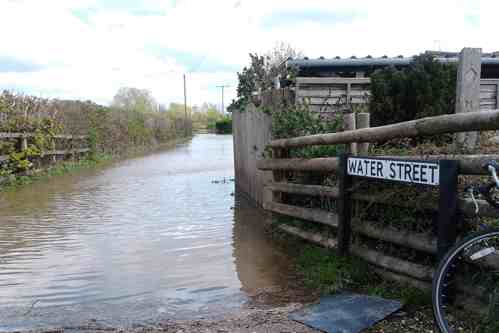
I live on the Somerset Levels, known historically as “the land of the summer people” because it used to be submerged during the winter months. Finding fossilised ammonites on walks is a poignant reminder that our area has not always been habitable. Its low-lying landscape and artificial drainage make flood risk a familiar part of life. Several times a year, our work, social and leisure plans can be disrupted because we cannot get out. It is usually no more than a nuisance, but what will it be like in 15–20 years’ time? Will we still be able to live there comfortably? How might it affect the value of our home? Will we spend more time surrounded by water, unable to make the journeys we had planned?
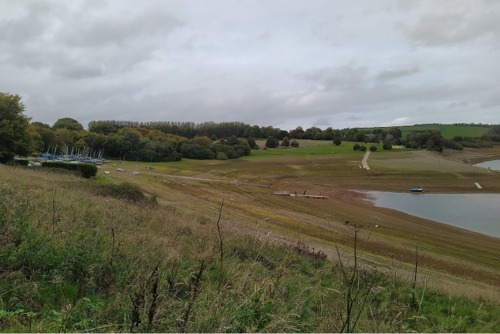
I love sailing and belong to a club on a large reservoir on Exmoor. In several recent years, we have had to stop sailing in late summer because there was simply not enough water to access the lake safely. With continued housebuilding in the wider area and drought conditions becoming more frequent, pressure on water resources has increased. Investment in infrastructure is clearly part of the picture, but it is difficult to know whether sailing there will still be possible when I retire.
My wife and I enjoy holidaying in rural Brittany, and we would very much like to spend more time there in retirement. However, after we returned from a trip in June, the region experienced a series of heatwaves in which temperatures frequently exceeded 40 degrees Celsius. I am uncomfortable in temperatures above 30 degrees, so more frequent extreme heat could affect whether it remains the retirement destination we currently imagine.
These examples are personal, but the planning questions are widely relevant. Could climate risks affect the value or insurability of a home, the affordability of travel, access to favourite places, or the level of contingency income required?
A robust retirement plan should test not only whether the money lasts, but whether it remains resilient as circumstances change.
Why climate change influences how I invest
These reflections have led me to view climate change not simply as a societal challenge, but as a retirement planning issue.
If climate change has the potential to influence where we live, how we travel, what we insure and the activities we enjoy, then it becomes difficult to separate retirement planning from investment decisions.
Climate change therefore needs to be part of how I invest for the future, rather than a risk I simply acknowledge, and hope will not affect me. It means allowing more contingency within my retirement plan to prepare financially for the possible effects of climate change, while also considering how my investments could influence the scale of the challenge itself.
The capital we invest today helps shape the economy and world we will eventually retire into.
After all, pension savings are not just there to fund our future. The capital we invest today helps shape the economy and world we will eventually retire into.
It makes no sense to be investing in businesses that are effectively compromising my retirement. Instead, I want my capital alongside other investors to help create positive outcomes and encourage businesses to operate more responsibly.
Avoiding simple labels
One emerging issue for climate-conscious investors is the rapid growth of AI. Unlike sectors I choose to exclude from my investments, such as tobacco, oil, armaments, pornography and gambling, AI presents both opportunities and risks to society. It has the potential to improve efficiency, reduce waste, accelerate medical advances and support solutions to environmental challenges. However, the manufacture of technology and the operation of increasingly energy-intensive data centres require significant amounts of energy, water and raw materials.
The challenge for investors is to assess these possible benefits alongside its environmental costs, rather than treating the technology as wholly positive or wholly negative.
Thoughtful investing is rarely a simple matter of labelling a company as good or bad.
Looking beyond exclusions
For investors who want their portfolios to reflect their values, avoiding certain companies is often only the first step.
Investors need to consider a company’s overall impact, the direction in which it is moving and whether shareholder engagement can encourage better environmental performance.
Castlefield’s Thoughtful Investor® approach begins by excluding businesses that do not meet our screening criteria. Companies that remain eligible for investment are then assessed for Ethics, Sustainability, and Transparency and Governance, with the highest-scoring investments in each sector selected.
However, investment selection alone is not enough. Castlefield’s Stewardship Team also seeks to encourage positive change and hold larger companies to account through meetings with management, voting at shareholder meetings and collaborative engagement with other organisations. The aim is to actively drive improvements where change is possible.
Independent analysis can help illustrate how this approach differs from more conventional investment strategies.
Impact Cubed’s 2025 assessment showed that, for every $1 million of revenue, the TM Castlefield Thoughtful Portfolio Growth Fund generated less than 16% of the benchmark’s Scope 1 and 2 carbon emissions and 58% of its Scope 3 supply-chain emissions. The fund also had just 8.3% of the benchmark’s exposure to environmentally destructive industries and 15% of its water use.
These figures do not mean that the portfolio has no environmental impact. They do, however, illustrate how investment selection and stewardship can produce materially different environmental outcomes from a conventional benchmark.
Investing for the retirement you actually want
Retirement planning has traditionally focused on one core objective: ensuring your money lasts. That remains essential, but as climate-related risks become increasingly visible in our daily lives, it’s difficult to view climate considerations as separate from long-term financial planning.
Investors do not necessarily have to choose between pursuing financial security and acting on their values. Through careful fund selection, meaningful exclusions and active stewardship, it is possible to align investments more closely with the future you would like to see.
For those concerned about investing in companies that contribute significantly to climate change, the encouraging news is that investors do not necessarily have to choose between pursuing financial security and acting on their values. Through careful fund selection, meaningful exclusions and active stewardship, it is possible to align investments more closely with the future you would like to see. Thoughtful investment can combine careful selection, meaningful exclusions and active stewardship, while recognising that all investments carry risks and no approach is perfect.
A useful first step is to understand what you own, ask how your money is being used and consider whether your investments are aligned with the future you hope to enjoy in retirement. Climate change isn't just an environmental issue. It's a retirement issue. A financial planner can help you explore the available options, understand the trade-offs and decide what is appropriate for your circumstances. Because ultimately, retirement planning is not only about having enough money for the future. It is also about helping to preserve the quality of that future itself.
Written by Rupert Lovesy
Information is accurate as of 22.10.2026. Opinions constitute the adviser's judgement as of this date and are subject to change without warning. This material may not be distributed, published or reproduced in whole or in part. With investment, capital is at risk.
The contents of this article are not intended to be construed as legal, accounting, tax or investment advice. You should seek independent financial advice if you are unsure whether an investment product is suitable for your personal financial circumstances and appetite for risk.