Single use plastics: lessons learned from Castlefield symposium X Trillion screening
Most of us interact with plastic for just a few minutes a day — opening a wrapper, grabbing a takeaway cup, unsealing a parcel. But the truth is, plastic interacts with the planet for far longer than it interacts with us. In this blog post, Castlefield adviser Helen Tandy shares the lessons learned from our recent screening of the documentary X Trillion, where we explored what happens to all that “invisible” plastic once it leaves our hands, and why investors, businesses and communities need to talk about this more openly.
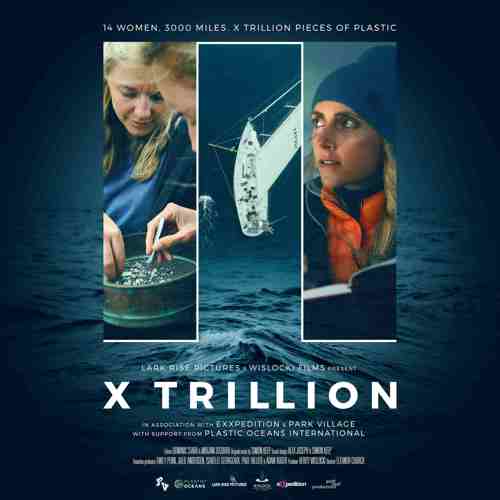
For our 2026 Symposium, we hosted a number of thoughtful clients, contacts and colleagues at the Halle St Michael’s venue in Ancoats, central Manchester. The event included a screening of the feature documentary X Trillion, which follows 14 women as they sail 3,000 miles across the North Pacific through a sea of discarded plastic.
I have often described myself as knowing more about single-use plastics than anyone in financial services ought to, so I was keen to introduce this topic as the main theme for discussion at this year's Symposium event, and invite Eleanor Church, the documentary’s director.
I got to know Eleanor when I hosted a national screening of the film in Chester, and it was fantastic to meet her in person for our symposium that blended emotion, science, and determined optimism.
For just over an hour, the audience sat enthralled as the film tackled the core absurdity of our modern system; materials that are engineered to last decades or even centuries are routinely used for minutes before being discarded.
A takeaway coffee lid, a snack wrapper, a hotel toiletries bottle; short-lived convenience, long-lived consequences.
What makes X Trillion powerful is not just the images, but the people. A diverse crew of scientists, teachers, artists and campaigners who return home as ambassadors determined to make the invisible, visible.
Following the film, director Eleanor Church along with Castlefield’s Head of Stewardship Ita McMahon, were welcomed onstage for a discussion about plastics, responsibility and how investors can help drive meaningful corporate change.
The significance of X Trillion
The film follows the journey of a 14-strong, all-woman crew, led by Emily Penn on their boat eXXpedition. Eleanor’s direction is the kind of storytelling that quietly rewires the way you look at everyday objects.
X Trillion takes viewers far out into the North Pacific, a thousand miles from land, through a dense soup of tiny plastic pieces. The crew encounter a toothbrush, a washing basket, a whole garden chair, and endless plastic fragments drifting through the water. As Eleanor shared, the crew went 19 days without seeing a single boat, yet the recurring sight of everyday plastic was deeply surreal.
For her, the most shocking discovery was the tiny microbeads — once found in everyday face washes and toothpastes — still turning up years after being banned in the UK in 2018.
Connecting the film to Castlefield: active stewardship and engagement on single-use plastic
After the screening, Ita McMahon offered a clear and compelling link between what we saw on screen and the stewardship work happening behind the scenes at Castlefield.
Ita described how stewardship goes far beyond excluding harmful practices. It’s about applying consistent, informed pressure to companies, so they reduce their plastic usage and overall impact. Ita reflected on Unilever’s journey with palm oil, imperfect but instructive, and how that influence-based approach can also be applied to shift how companies think about plastic.
She explained the unique challenges of engaging with US-listed companies, where shareholder resolutions are often the only way to get environmental issues onto the boardroom agenda. This year, Castlefield supported a resolution urging Procter & Gamble to publish a report on its plastic footprint. Only 11% of shareholders supported it, which Ita described as “shocking but galvanising”, although crucially, the vote was still high enough to ensure the issue can be refiled next year.
Ita's message was clear: even small investors can influence boardrooms when they show up consistently and purposefully. Every engagement gets logged. Every concern must be escalated. And over time, that repetition matters.
The big questions: Why did plastic become so dominant?
During the Q&A, a member of the audience asked the deceptively simple question: “Why did businesses start using so much plastic?” Ita’s answer cut right to the heart of it.
Plastic is lightweight, hygienic, protective, and above all, cheap. Once it became ubiquitous, it then becomes even cheaper and spread into every corner of supply chains. She also pointed out the subtle but meaningful shifts already happening; supermarkets reducing excess packaging, companies “lightweighting” bottles by shaving a few grams off them at a time, and alternative materials slowly emerging.
Small changes, yes, but evidence that pressure works.
Zotefoams and “durable plastics”: getting the trade-offs right
One of the companies we touched upon was Zotefoams, which produces aerated foam plastics — essentially, plastics expanded with nitrogen gas to achieve the same level of performance while using significantly less plastic.
As Ita noted earlier in the evening, these longer-life plastics often sit in a different category: they’re not single-use; they’re used in aviation, construction, protective equipment and thermal insulation.
They can have positive environmental impacts — such as reducing energy use — even though they’re still plastic-based. That’s why stewardship here is about driving improvement and transparency, not blanket exclusion.
What's next?
Many of the reflections after the film were about what we can do differently or better. Here’s our Castlefield New Year’s Resolution:
In January, we’ll be inviting Castlefield team members to join lunchtime screenings of X Trillion in our boardroom, giving them a chance to watch, talk, learn, challenge each other, and spark new ideas.
And we’d love your help to take it further.
Please share the film with your friends, colleagues and networks to make sure more people learn about the impact of plastic.
Host your own screening if you can. The more eyes we can get on this issue, the more momentum we build for change, as investors, as consumers and as citizens.
Written by Helen Tandy
Learn more about X Trillion and how to purchase the film, or organise your own screening event by using the following link:
https://www.xtrillionfilm.com/