Engagement on Foresight's Scope 3 Emissions
Leading infrastructure and private assets manager, Foresight Group, specialises in sustainability-focused investments, including renewable energy and energy transition infrastructure.
As part of our stewardship activity, we recently engaged with two of the firm's sustainability specialists to better understand why its reported Scope 3 emissions appeared significantly higher than those of its peers. In this article, we explore what we learned, why the figures appeared elevated, and what the discussion tells us about the importance of looking beyond headline ESG data.
Foresight Group is a leading infrastructure and private assets investment manager operating across Europe and Australia. The firm focuses on long-term investments in real assets, particularly in sustainability-led sectors such as renewable energy, energy transition and associated infrastructure, which are typically difficult for investors to access directly.
Foresight Group is a leading infrastructure and private assets manager specialising in sustainability-focused investments, including renewable energy and energy transition infrastructure. As part of our stewardship activity, we recently engaged with two of the firm's sustainability specialists to better understand why its reported Scope 3 emissions appeared significantly higher than those of its peers.
We met with two sustainability specialists from Foresight as its Scope 3 emissions profile seemed very high compared to its peer group, which in turn was skewing the Scope 3 emissions for our own Thoughtful UK Smaller Companies Fund.
Before Engagement
Concern Identified: Scope 3 emissions significantly higher than peers, as identified through Impact Cubed analysis.
- Limited visibility over the main drivers of emissions and the company’s plans for reducing them.
- Sought to understand whether higher emissions reflected more comprehensive reporting than its competitors or genuine exposure to emissions-intensive assets.
First Engagement (2025)
Further engagement necessary: Met with two sustainability specialists to discuss the sources of the company’s elevated Scope 3 emissions.
The reason for high emissions was identified but further clarity was required regarding long term decarbonisation plans and the future of gas assets held.
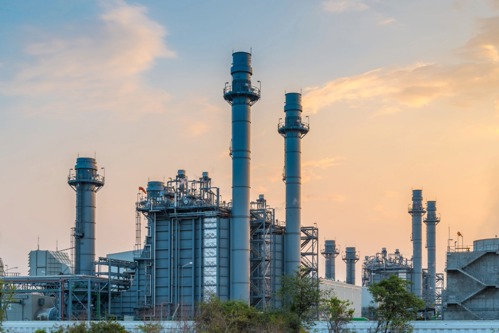
- Identified two key contributors within an infrastructure fund: Australian gas generation assets and Energy-from-waste assets.
- Gas assets represented less than 10% of assets under management
but accounted for around two-thirds of Scope 3 emissions. Combined
with energy-from-waste, these assets generated 89% of infrastructure
emissions. - Company explained that gas exposure was inherited through a recent
Australian acquisition and argued that gas is widely viewed as a lowercarbon
alternative to coal in that market.
Follow Up Engagement (2026)
Commitment to improvement: Company provided a clearer explanation for reducing exposure to high-emitting assets.
We are satisfied that our concerns are being addressed, although we will continue to engage on timing of disposals and encourage future targets.
- They confirmed that Australian gas assets expected to be largely exited within the next two to three years.
- Climate Alignment Plan launched to support portfolio decarbonisation.
- Specialist carbon forecasting capability introduced to improve emissions
analysis and target-setting. - Commitment made to continue providing updates on progress.
Written by Ita McMahon
This article was originally published as part of our Q3 2026 Investment Management Report (IMR).
Information is accurate as at 19.10.2026. Opinions constitute the fund manager’s judgement as of this date and are subject to change without warning. The officers, employees and agents of CIP may have positions in any securities mentioned herein. This material may not be distributed, published or reproduced in whole or in part. With investment, capital is at risk.