What we’ve been reading: The Books Shaping Our Thinking on Climate and Nature
With World Book Day as a reminder of the power of a good book, we asked co-owners to share the climate and environment books that have influenced them most, and why. These are some of the titles that have shaped our thinking within the team.
We’ve been reflecting on some of the titles our team has been reading recently. From climate change and nature to the transition to net zero, these are the books that have shaped our thinking about a more sustainable future, sparking conversations and inspiring action across the Castlefield team.
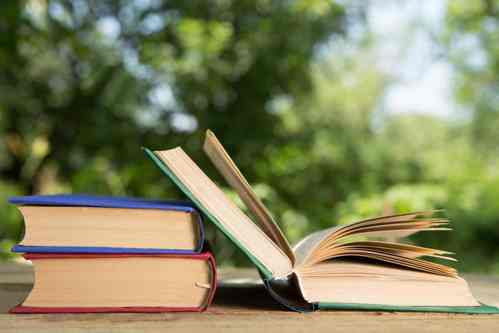
What our co-owners are reading:
Olivia S: Braiding Sweetgrass by Robin Wall Kilmer
Robin Wall Kilmer, a Native American botanist, tries to balance her scientific and academic training with Indigenous wisdom. In the book, she explores how Indigenous cultures and teachings are frequently overlooked by Western science and academia, even though they hold vital knowledge and lessons.
This really changed the way I see nature. For many of us living in the Global North - especially those of us urban areas who commute to cities for work, our contact with nature is very limited. Even when we do encounter it, it is just a few trees lining the street or flower beds that serve more of an aesthetic purpose. Over time, this distance from nature has led to disconnection, so we fail to realise just how essential it is.
This book highlights just important nature is for the planet and climate, but also for our own health and wellbeing. It explores how Indigenous peoples see and connect with the land: for them, nature is not just a resource to be exploited, but a living presence that is deeply intertwined with their identity and culture. Embracing this wisdom can help us move towards a more sustainable future.
Knowing that you love the earth changes you, activates you to defend and protect and celebrate. But when you feel that the earth loves you in return, that feeling transforms the relationship from a one-way street into a sacred bond."
Ewelina: The Hidden Life of Trees by Peter Wohlleben
The Hidden Life of Trees by Peter Wohlleben is a lovely, eye‑opening exploration of the world of trees, woods, and forests around us. I’ve loved trees forever. My family worked in forestry back in Poland, so this feels close to home for me. Wohlleben enables readers to discover what’s happening underground through really accessible and engaging storytelling.
He introduces the world of trees as social ecosystems. Trees communicate, cooperate, and nurture one another. They share resources and genuinely look out for each other. I finished the book feeling more connected to nature and more aware of how much we still have to learn from the quiet intelligence of trees.
A tree can be only as strong as the forest that surrounds it."
There’s also a children’s version – a shorter, illustrated book written in a Q&A format called Can You Hear the Trees Talking? – which I, of course, read with my kids!
Josh: Gachiakuta by Kei Urana
My recommendation is an ongoing manga series, so more pictures than words, but it’s quite a relevant topic with regards to the environment/sustainability and how people value objects and others.
A dark fantasy/dystopian manga that follows Rudo, a young man unjustly cast into a massive trash-filled chasm known as the Abyss. Society above lives in a pristine, advanced world, while everything, and everyone, deemed “worthless” is literally thrown downward to rot. Rudo, who has a talent and passion for repairing discarded objects, survives among outcasts and begins uncovering the truth behind the world’s harsh caste system.
One of Gachiakuta's most powerful elements is its critique of overconsumption and the ease with which society discards both objects and human beings. Kei Urana is also a female manga writer, which is pretty rare in that sphere.
Ffion: Silent Earth by Dave Goulson
I loved Silent Earth because it explains the drivers of insect decline with real scientific clarity while keeping the narrative warm and personal. The book connects habitat fragmentation, pesticide impacts, and wider ecosystem dynamics to everyday experience. The mix of evidence, field observations, and practical solutions makes the book not just informative but genuinely inspiring - it left me with a much deeper appreciation for insects’ ecological roles.
Insects are essential for life as we know it - without them, our world will slowly grind to a halt."
Pooja: Raising Hare by Chloe Dalton
I read Raising Hare by Chloe Dalton recently and found it very thought provoking and made me think about the ethics of intervention in the wild. It is an interesting story of a city girl and a newly born hare and their journey together. It chronicles an extraordinary relationship between human and animal, rekindling almost a sense of awe towards nature and wildlife.
Helen: How Bad are Bananas by Mike Berners-Lee
How Bad Are Bananas? by Mike Berners-Lee is a practical and engaging guide to understanding the carbon footprint of everyday things, and something I mention in the Carbon Literacy Training here at Castlefield. The book breaks down how much greenhouse gas emissions are produced by common activities and products, from eating a banana or sending an email to taking a flight or manufacturing a car.
He explains complex climate data in simple, relatable terms, often using surprising comparisons to show what really makes a big environmental impact and what doesn’t. One of the key messages is that while small actions matter, the biggest differences come from addressing high-impact behaviours like air travel, home energy use, and diet.
Olivia B: The Revenge of Gaia by James Lovelock and Secret Life of Trees by Colin Tudge
James Lovelock - The Revenge of Gaia is a classic, that introduced the idea of Earth functioning as a self-regulating system. James Lovelock was a scientist, environmentalist and futurist and his ideas have influenced modern environmental movements in many ways. When in 2004 he supported nuclear power as a way to reduce our reliance upon fossil fuels, we saw some clients also become more tolerant of the idea.
I call Gaia a physiological system because it appears to have the unconscious goal of regulating the climate and the chemistry at a comfortable state for life."
Colin Tudge's Secret Life of Trees made me think for the first time "what is a tree?" It's a must read for all tree lovers (dare I say huggers?!) and combines fascinating scientific facts with an elegant writing style.
Overall, the book helps readers make informed choices by putting climate impact into perspective and encouraging smarter, more effective ways to reduce their carbon footprint.
These are just a few of the books that have inspired us at Castlefield. We’d love to hear from you too – join the conversation and share your favourites with us.
What does sustainability mean at Castlefield?
At Castlefield, our commitment to net zero has always been more than a target - it’s part of who we are. Since beginning this journey in 2020, we’ve built a deeper understanding of our environmental impact, strengthened the quality of our emissions data and learned a huge amount along the way.
As specialists in responsible investment, it’s important to acknowledge the climate crisis and use our influence as shareholders to try and prevent the catastrophic impacts on our planet and its people. The urgency of this isn’t lessening. We aim to convey that urgency by engaging with the management teams of the companies that we invest in to emphasise its importance on the corporate agenda.
Last year, we set out our intention to intensify our engagement with companies over their net zero plans – details of this can be found in our annual stewardship report, as well as our recent stock stories. Not only do we aspire to reduce our own emissions to Net Zero, but we also hope to inspire our team, partners, supporters and communities to take action. We’re already working on the next stage of our net zero ambitions, so keep an eye on our website and social media for updates soon.
Written by Olivia Shields