COP31: Storm Clouds Over Global Climate Action
The world's attention may already have moved on from COP31, but the questions raised by this year's climate summit remain highly relevant. Against a backdrop of worsening extreme weather, geopolitical tensions and growing economic pressures, the conference exposed the challenges of turning climate ambition into meaningful action.
Castlefield Investment Analyst David Gorman reviews what happened, what was achieved, and what it tells us about the future of international climate cooperation.
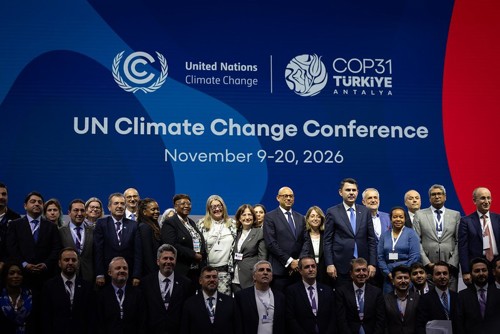
Photo source: UNclimatechange | Flickr
After another year of extreme weather, the 2026 United Nations Climate Change Conference, or COP31, held in Turkey, ended in disappointment. More than 92,000 people representing 200 countries registered to attend the event, bringing many economic benefits to Antalya but raising concerns about the summit’s own carbon footprint.
A difficult conference from the outset
The Conference itself has been seen by many observers as a failure. The US didn’t attend at all and talks over-ran amid disagreements over fossil fuels and climate finance. The wording of the final deal proved unacceptable to the EU, Pacific island nations and others because it failed to directly mention fossil fuels, seen as the main cause of global warming.
This was the first COP since the UN warned that global temperatures are expected to exceed 1.5C degrees above pre-industrial levels. That is the threshold which countries agreed not to breach as part of the Paris Climate Agreement signed in 2015. COP31 delegates disagreed over how to respond to this development as well as about the timing of forthcoming assessments by the Intergovernmental Panel on Climate Change (IPCC). Governments also failed to reaffirm the commitment made at COP28 in Dubai to transition away from fossil fuels.
Non-binding pledges of funding also leave an accountability gap, where they become vague promises rather than tangible commitments.
Why consensus remains a challenge
Critics argue that, not for the first time, the Conference’s rules on consensus (where every nation must agree on wording) enable major fossil fuel producers to water down agreements, while political and economic interests and widespread corporate lobbying get in the way of bigger ambitions. Non-binding pledges of funding also leave an accountability gap, where they become vague promises rather than tangible commitments.
Is the 1.5°C goal still achievable?
Many countries say they are committed to eventually bringing warming back down to 1.5C, but that will require an ambitious ramping up of technologies - that do not yet exist at sufficient scale, alongside substantial investment in carbon removal solutions - to remove carbon dioxide from the atmosphere.
COP supporters counter that the Conference at least signals the direction of travel, gives vulnerable countries some negotiating leverage and enables clean-energy partnerships to be agreed on the sidelines of the formal talks.
Progress beyond the headlines
Away from the disappointing headlines, negotiations covered another 164 agenda items and produced some agreements, including directing international carbon-credit proceeds towards climate change adaptation in developing countries and advancing a “just transition” framework for workers and communities. Any unresolved issues will carry over to COP32 next year, in Addis Ababa.
Were these conferences not underpinned by the authority of the UN, questions might increasingly be asked about their long-term relevance and effectiveness.
What does COP31 tell us about the future?
COP31 reflects the volatile times we live in, where trust and cooperation are in short supply and energy is top of the geopolitical agenda. The Conference exposed the widening gap between the political grandstanding of jet-set climate diplomacy and the day-to-day realities of getting on with the energy transition. Were these conferences not underpinned by the authority of the UN, questions might increasingly be asked about their long-term relevance and effectiveness.
That said, the international climate framework is already well-established, so future summits could focus less on big new agreements and more on the nuts-and-bolts of monitoring and delivering existing commitments – marginal gains rather than great leaps.
Written by David Gorman, 26th November 2026