Castlefield Stock Story - Visa
In this Castlefield stock story, investment Analyst David Gorman introduces Visa – the global payments leader connecting billions of consumers and merchants and "making commerce easier".
This month we feature a household name whose shares we hold in our TM Castlefield Thoughtful World Equity Fund. Pretty much everyone has heard of Visa and many of us, including me, use their products and services daily.
Based in San Franciso and listed on the New York Stock Exchange since 2008, Visa sits at the centre of millions of financial transactions every day by providing the infrastructure that debit cards and credit cards run on.
By connecting more than four billion account holders to over 150 million merchants, around 14,500 financial institutions and governments in more than 200 countries and territories, Visa helps bring everyone into the digital economy.1
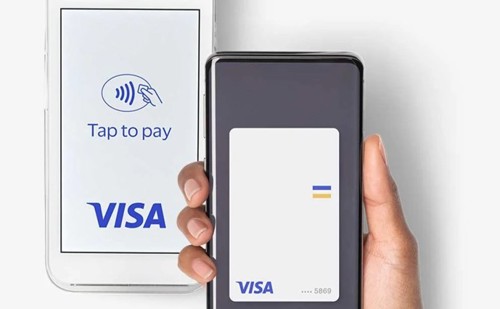
The company does not itself issue cards or extend credit directly to consumers. Instead, Visa provides financial institutions with branded payment products that they use to offer credit, debit, prepaid and cash access programmes to their customers. Visa makes money by taking a small percentage of every transaction through its network. In the UK, these interchange fees are capped at 0.2% for debit cards and 0.3% for credit cards.2 Fees for other services can be higher.
In the cards market, Visa competes with other big names like Mastercard, American Express and, in the US, Discover (now part of Capital One). Visa has the largest card network in the US3 and, in such a competitive market, it defends its position vigorously. In payment services, it competes with the likes of PayPal, Stripe and Worldpay.
As the dominant player in this global market, which is growing at 7% a year,4 Visa enjoys good profit margins and is a strong financial performer, despite continuing to invest in its technology
Why do we like this business? The payment services industry, led by Visa, should enjoy good growth in the next few years, supported by industry trends such as further shifts away from the use of cash, the spread of contactless payments, e-commerce, digital wallets and mobile payments, enhanced cyber security measures such as fingerprint recognition and real-time payment systems which enable faster bill settlement. As the dominant player in this global market, which is growing at 7% a year,4 Visa enjoys good profit margins and is a strong financial performer, despite continuing to invest in its technology. Visa also has a policy of returning capital to shareholders, via both dividends and share buybacks.
As well as probably having the Visa logo on a card in a purse or wallet, many people will be familiar with the brand from Visa’s extensive sponsorship of sports events, such as the Olympic and Paralympic Games and the NFL.5
The Visa Foundation, established in 2017, aims to support financial inclusion and community impact around the world. Latest figures suggest that The Visa Foundation has so far committed $200m to support financial inclusion, $120m in investments and $80m in grants, partnering with more than 70 organisations.6
To improve financial inclusion, the Visa Foundation helps small businesses, usually female-owned, and under-served entrepreneurs worldwide.
To improve financial inclusion, the Visa Foundation helps small businesses, usually female-owned, and under-served entrepreneurs worldwide. In practical terms, this means providing grants and loans to support access to the digital economy as well as training people in business skills,7 creating ripple effects for their families, employees and customers. Alongside these long-term programmes, the Visa Foundation also responds to immediate needs, such as donating $2m to support wildfire relief efforts in its home state of California.8
As we might expect, Visa is also very active in Consulting and Analytics, for instance through its Retail Spend Monitor,9 which offers a broad view of US retail activity. Preliminary data for the 2025 festive period shows that overall holiday retail spending increased 4.2% year on year (UK +3.6%.) Visiting actual shops remained popular with the US consumer: 73% of holiday payment volume was in physical stores while 27% of retail spend happened online. These insights from the Visa Retail Spend Monitor help businesses adapt to changing consumer behaviour and prepare for the rapidly evolving future of commerce.
Written by David Gorman
Information is accurate as at 13.01.2026. Opinions constitute the fund manager’s judgement as of this date and are subject to change without warning. The officers, employees and agents of CIP may have positions in any securities mentioned herein. This material may not be distributed, published or reproduced in whole or in part. With investment, capital is at risk.
References
2 Interchange fees: what are they, how do they work and how can you reduce costs?
3 Visa Claims Top Spot in FinTech Top 100 Companies List | FinTech Magazine
4 Global Payment Statistics & Charts (2025)
6 Visa Foundation | Promoting thriving communities for all | Visa
7 Visa Foundation | Impact Report quantifying our commitment | Visa
8 Visa Foundation Supports Los Angeles Wildfire Recovery Efforts | Visa
9 Visa Analysis: U.S. Holiday Spending Rose 4.2% | Visa