Castlefield Stock Story - Springfield Group
It’s hard to find positive news stories just now, especially in an area such as housing, but we think that Springfield Properties PLC, has a good tale to tell.
In this latest featured stock piece, Castlefield Investment Analyst David Gorman introduces the Scottish-based homebuilders - held in our Thoughtful UK Smaller Companies Fund.
The Springfield Group is one of the largest publicly listed homebuilders in Scotland. Operating under brands like Springfield Properties, Dawn Homes, Walker Group, Tulloch Homes and Mactaggart & Mickel Homes, Springfield builds high quality, award-winning, energy efficient homes across Scotland.
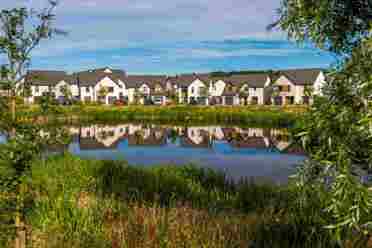
We don’t own shares in any housebuilders operating in England and Wales but we like the Scottish housing market because it’s a more manageable size and Scots Law makes transactions smoother and more predictable. It takes almost twice as long to complete a property transaction in England and Wales than it does north of the border.[1] In Scotland, the vendor pays for a home report, including the survey, before putting a property up for sale.
There are fewer speculative bids and firm offers to buy are legally binding, so there’s no gazumping. However, one similarity with England and Wales is that Scotland suffers from a chronic shortage of housing[2] and, in recognition of this, the Scottish government is at least talking about supporting new building.[3]
we like the Scottish housing market because it’s a more manageable size and Scots Law makes transactions smoother and more predictable
Like many UK housebuilders, Springfield has faced some challenges since the pandemic. Sourcing building materials and skilled labour became harder and more expensive, while high interest rates and mortgage affordability issues reduced homebuyer confidence. The company’s cost of borrowing also increased, just as sales were squeezed.
The board dealt well with these difficulties. To conserve cash, Springfield reduced dividend payments and cut back on speculative housebuilding. The company also sold off parts of its landbank to help reduce bank debt, for instance generating £64m from a deal to sell 2,480 plots of undeveloped land with planning consent to Barratt Redrow.[4] Another positive from this deal is that it allows Springfield to focus on opportunities in its Highland heartland.
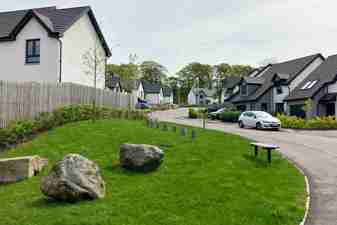
The Highland region is central to government plans to upgrade the energy grid for the whole of Great Britain. The government and energy companies are investing heavily in upgrading electricity transmission networks and huge numbers of new cables and pylons are required to bring electricity from wind farms in northern Scotland to areas of demand further south.
The Highland region is central to government plans to upgrade the energy grid for the whole of Great Britain
The Highland region is also home to one of the UK’s new Freeports, the Inverness and Cromarty Firth Green Freeport. Launched by the last government, these projects are designed to boost investment into parts of the country previously left behind. The redeveloped facilities will benefit from a generous package of incentives, as well as excellent port infrastructure and will build on the proud industrial heritages of their respective home regions.[5]
Just before Christmas last year, Springfield announced an agreement with SSEN Transmission, part of SSE PLC, to develop 293 homes at six sites across the Highlands, Moray and Aberdeenshire.
The plan is that Springfield will provide the enabling works to prepare building sites for construction and will receive payment from SSEN Transmission to fund site-opening costs. Then Springfield and SSEN will enter into a further agreement for the build and lease of the housing. These new homes should be delivered by Springfield in phases over the next three years and will be leased by SSEN for an initial four-year period. The homes will accommodate workers involved in SSEN Transmission's energy upgrade projects in the region.
At the end of each lease, the properties will revert to Springfield’s ownership, giving the company the option to sell the houses to private buyers, the private rented sector or to affordable housing providers. It is hoped that Springfield’s partnership with SSEN will deliver homes that will benefit local people for decades to come.
Springfield recently released half year results which, after such a challenging period, were reassuring. The best-performing business area was Affordable Housing, which saw sales increase by 26%, offsetting an expected and hopefully temporary decline in revenues from Private Housing. Despite selling off some pockets of land, Springfield still has a large, high-quality landbank of 7,305 owned and contracted plots, 63% of which have planning permission, and 6,293 strategic plots. The landbank includes 4,362 owned and contracted plots and 4,652 strategic plots in the North of Scotland,[6] close to the key development areas and underlining Springfield’s strength in Highland region. Much to look forward to.
Written by David Gorman
Disclaimer
Information is accurate as at 18.02.2026. Opinions constitute the fund manager’s judgement as of this date and are subject to change without warning. The officers, employees and agents of CIP may have positions in any securities mentioned herein. This material may not be distributed, published or reproduced in whole or in part. With investment, capital is at risk.