Castlefield Stock Story - Alphabet, Inc.
In this Castlefield featured stock piece, David Gorman introduces Alphabet Inc, the American multinational technology giant and parent holding company of Google, held in our TM Castlefield Thoughtful World Equity Fund.
"I’ll Google it". You know your product is a household name when it becomes a verb, a bit like “to Hoover.” Google is part of Alphabet, Inc., which is a constituent of our TM Castlefield Thoughtful World Equity Fund.
Google was established about thirty years ago by Sergey Brin and Larry Page, who met as students at Stanford University in California. The pair were both interested in finding a way to organise the growing number of websites on the internet and got chatting. They created a search engine which ranked web pages based on their importance and relevance to the terms entered. This search engine was originally called Backrub, before eventually changing its name to Google.[1]

The company joined public markets in 2004 at a valuation of $23 billion, which sounds a lot until you realise that it’s now valued at $3.67 trillion (US).[2] Alphabet, Inc. was formed in 2015 through a corporate restructuring, which made Google and its other businesses subsidiaries of Alphabet. Over the last twenty years or so, the company has made numerous acquisitions into various technologies. These include the internet, computer hardware and software, robotics, artificial intelligence, autonomous driving, drone delivery, health and biotechnology, space launch technology and the venture capital that supports all these industries.[3]
Businesses now under the Alphabet umbrella include Android, Bard, Chrome, Cloud, DeepMind, Fitbit, Gemini, Google Pixel phones, Play, Translate, Waymo, Waze and YouTube. Waymo is the autonomous driving technology company whose driverless cars are now out mapping the roads of London, prior to the full commercial launch of a ride-hailing service late this year or in 2027. Waymo vehicles are already in service in California but UK roads will present a different challenge.
Google absolutely dominates web searching and its numbers are mind-boggling. It conducted more than five trillion searches in 2024, about fourteen billion a day, giving it a 93.6% share of the web search market and yet it’s still growing rapidly.
Google absolutely dominates web searching and its numbers are mind-boggling. It conducted more than five trillion searches in 2024, about fourteen billion a day, giving it a 93.6% share of the web search market and yet it’s still growing rapidly. In 2024, the number of Google searches grew 21.6% year-on-year. It’s worth noting that Google was used for 373 times as many searches as Chat GPT in 2024.[4]
The 2006 acquisition of YouTube has proven to be especially shrewd. Google paid the founders of YouTube the equivalent of $1.65bn in shares for a video site which was less than two years old at the time. What was considered then to be something of a gamble on a pre-profit startup is now recognised as one of the best deals of the past two decades. YouTube now has 2.7 billion active users and in 2024 it generated $36.1 billion in advertising revenue, up 14.6% on 2023.[5] Hosting more than 20 billion videos[6], it is the second-most visited website in the world after Google and, were it to be sold as a standalone company, it would fetch around $500 billion.[7]
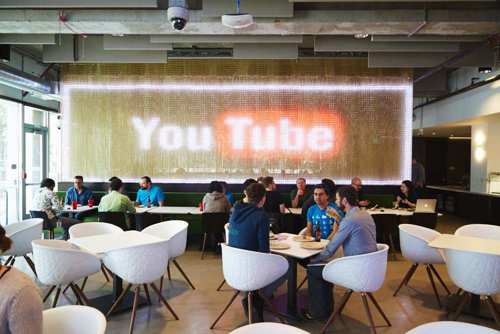
How does Alphabet make money? Revenue comes from one of five main sources: Google Search, YouTube, Google Display Network, Google subscriptions and Google Cloud. However, three parts of the business, Google Search, YouTube and Google Display Network, make most of their revenue from advertising. Around 80% of Alphabet’s total revenue comes from advertising, sponsored links, pay-per-click, etc. with the rest coming mainly from subscriptions. YouTube has 107 million paid subscribers.[8]
Given its market dominance, the company is also under regular scrutiny from U.S. regulators pursuing antitrust cases, particularly regarding its control of online advertising markets.[9] Litigation is a fact of life for most large US companies, but we are keeping an eye on this.
Artificial Intelligence is both a threat and an opportunity. Google Search is under some pressure from AI chatbots such as OpenAI’s ChatGPT and Anthropic’s Claude, but these products have a very long way to go before they challenge the dominance of Google.
Artificial Intelligence is both a threat and an opportunity. Google Search is under some pressure from AI chatbots such as OpenAI’s ChatGPT and Anthropic’s Claude, but these products have a very long way to go before they challenge the dominance of Google. On the plus side, Alphabet’s own AI strategy is well advanced. The company is investing in the long-term infrastructure that can support huge growth in data processing, generative AI services and enterprise-grade AI applications.

This year, the company has committed to doubling its 2025 capital expenditure to around $180 billion and most of this huge budget will be spent on expanding AI infrastructure, including data centres, servers, networking hardware and next-generation processing units designed to support massive AI workloads. Central to Alphabet’s plan is the Gemini AI model, a generative AI offering that now serves hundreds of millions of monthly active users. By embedding Gemini into products like Android, Google Search and YouTube, Alphabet is turning AI from a standalone feature into a daily utility.[10]
Alphabet’s revenues and earnings per share should continue to increase for years to come. Like companies such as Microsoft and Apple (both of which we also invest in), Alphabet’s products are central to our modern connected life and are likely to remain so.
Why do we invest in the stock? Despite fantastic sales growth over the last decade or more, Alphabet’s revenues and earnings per share should continue to increase for years to come. Like companies such as Microsoft and Apple (both of which we also invest in), Alphabet’s products are central to our modern connected life and are likely to remain so.
Written by David Gorman
Information is correct as at 18.03.2026. Opinions constitute the fund manager’s judgement as of this date and are subject to change without warning. The officers, employees and agents of CIP may have positions in any securities mentioned herein. This material may not be distributed, published or reproduced in whole or in part. With investment, capital is at risk.
Image Sources: Google