Ask an Adviser: Your Money Questions Answered - August 2026
Ask an Adviser returns this month, continuing the conversation and answering more of your most pressing money questions.
This is your opportunity to ask any questions, gain insights, and receive practical guidance tailored to your needs. Whether you're considering how to help your children get on the property ladder, or need clarification on key topics like wills, funding education and care costs, our experts are here to help.
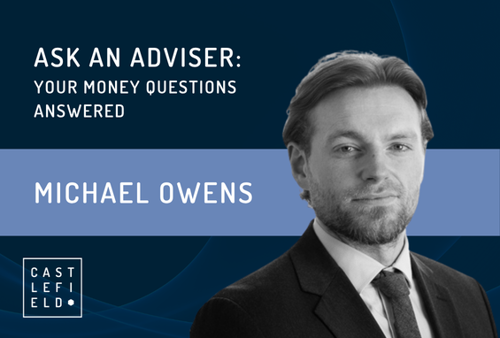
In this edition, we are talking about mortgages and investing. Adviser Michael Owens answers the question:
"I've Recently Come into Some Money. Should I Pay Off My Mortgage Early or Invest It for the Future?"
"When someone has savings surplus to their needs, a common question we get asked is whether they should invest the money or use it to pay off their mortgage. There can be a strong case for either option, and there are several considerations to unpack before deciding which approach is right for you.
The Case for Paying Off Your Mortgage
Becoming mortgage-free is an appealing prospect for everyone. Psychologically this can bring real benefits. Many people place a high value on the security of knowing they don't owe money to a lender, particularly if they're approaching retirement or considering reducing their working hours.
Financially there can be a compelling argument for paying off the mortgage too. For example, if you have a mortgage charging 4.5% interest, paying it off effectively gives you a guaranteed return equivalent to that interest rate. Unlike investing, there's no market volatility and no uncertainty about the outcome.
The Case for Investing
On the other hand, there can be a strong argument for investing rather than immediately paying down the mortgage. Future returns are never guaranteed, but over long periods diversified investment portfolios have historically generated returns that can exceed typical mortgage interest rates.
What’s more, while paying off the mortgage can provide security and a big reduction in bills, it does not in itself provide any retirement income.
The Right Answer Depends on Your Objectives
The best approach is to consider what your financial objectives are and work backwards from this position. For individuals with sufficient retirement resources to meet their long-term income goals, paying down the mortgage may be a no-brainer. For higher earners, channelling these funds into pension contributions which attract valuable tax relief could prove more effective.
For some people, the clearest path to meeting their goals means becoming mortgage-free and enjoying greater financial security. For others, investing will provide the best opportunity to build long-term wealth. And for many, a combination of the two may be the most sensible solution.
It's Not Just About the Numbers
A well-considered plan should take account of both the financials and what matters most to you personally. It’s worth taking some time to ask yourself:
• How would you feel if investment markets fell shortly after investing the money?
• How important is financial security and peace of mind?
• Could reduced mortgage payments improve your quality of life today?
Some people value certainty over the possibility of higher returns. Others are comfortable taking some investment risk if it improves their chances of meeting future goals.
If you're unsure which route is right for you, seeking guidance from a financial advisor can help you explore your options, clarify your financial goals and model different outcomes using cashflow forecasting software."
Written by Michael Owens
Information is accurate as of 25.08.2026. Opinions constitute the adviser's judgement as of this date and are subject to change without warning. This material may not be distributed, published or reproduced in whole or in part. With investment, capital is at risk.
The contents of this article are not intended to be construed as legal, accounting, tax or investment advice. You should seek independent financial advice if you are unsure whether an investment product is suitable for your personal financial circumstances and appetite for risk.